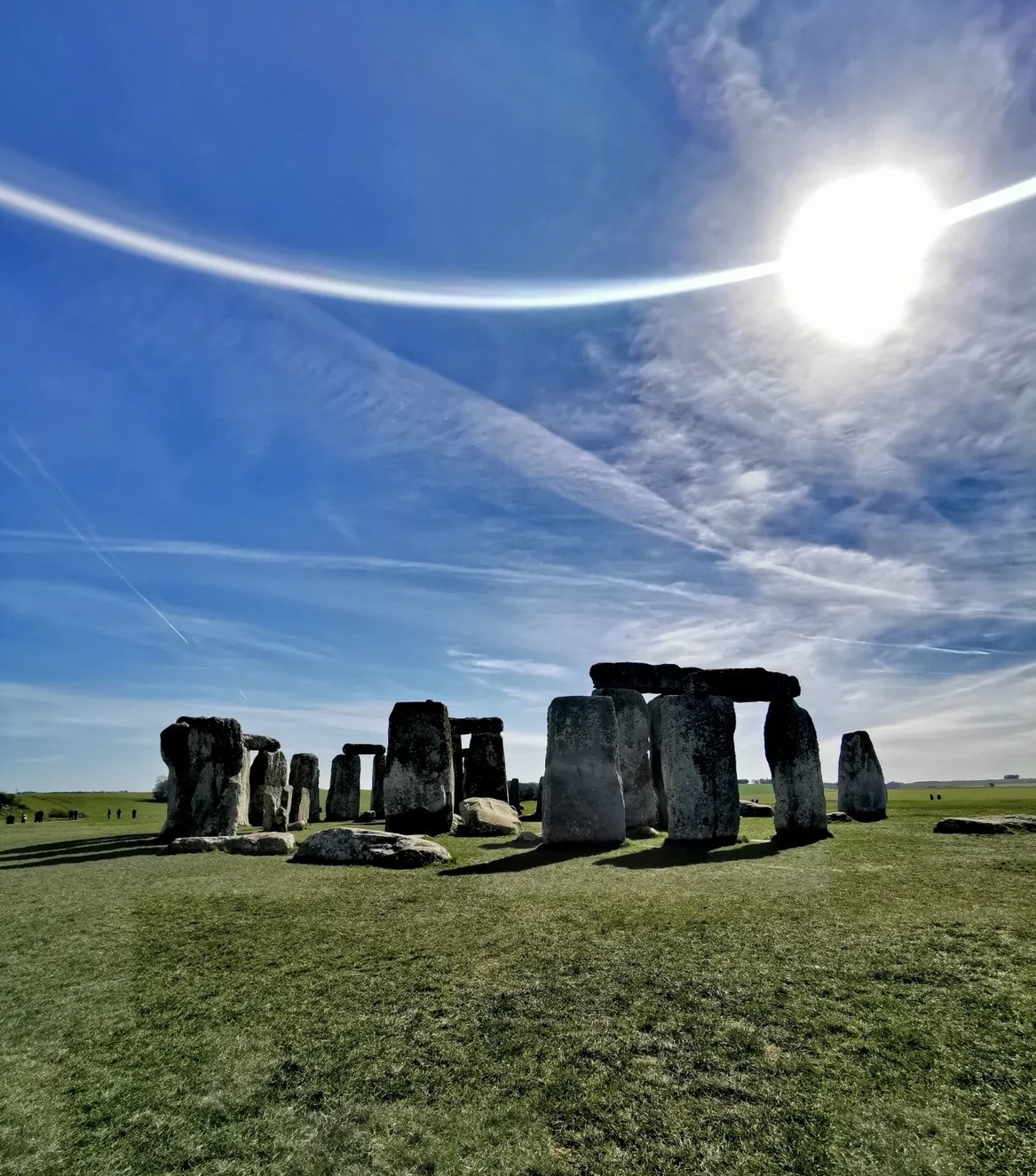
The Stonehenge site preserves human activity from 8500–7000 BC. The first major monument here, a circular earthwork enclosure, was laid out around 3000 BC. Later construction drew material from far beyond Wessex, including bluestones from southwest Wales and the Altar Stone from northeast Scotland. Its principal axis was aligned to the solstices, binding the monument to a recurring astronomical order. Evidence from the wider Stonehenge landscape suggests that it served as a point of assembly, attracting people from multiple regions. My guide remarked, with some understatement, that these were “not stupid people.” Stonehenge shows a society capable of innovation, learning, and cooperation among communities. On the same day, my co-author and friend texted me that Sharif University of Technology in Tehran had been hit.
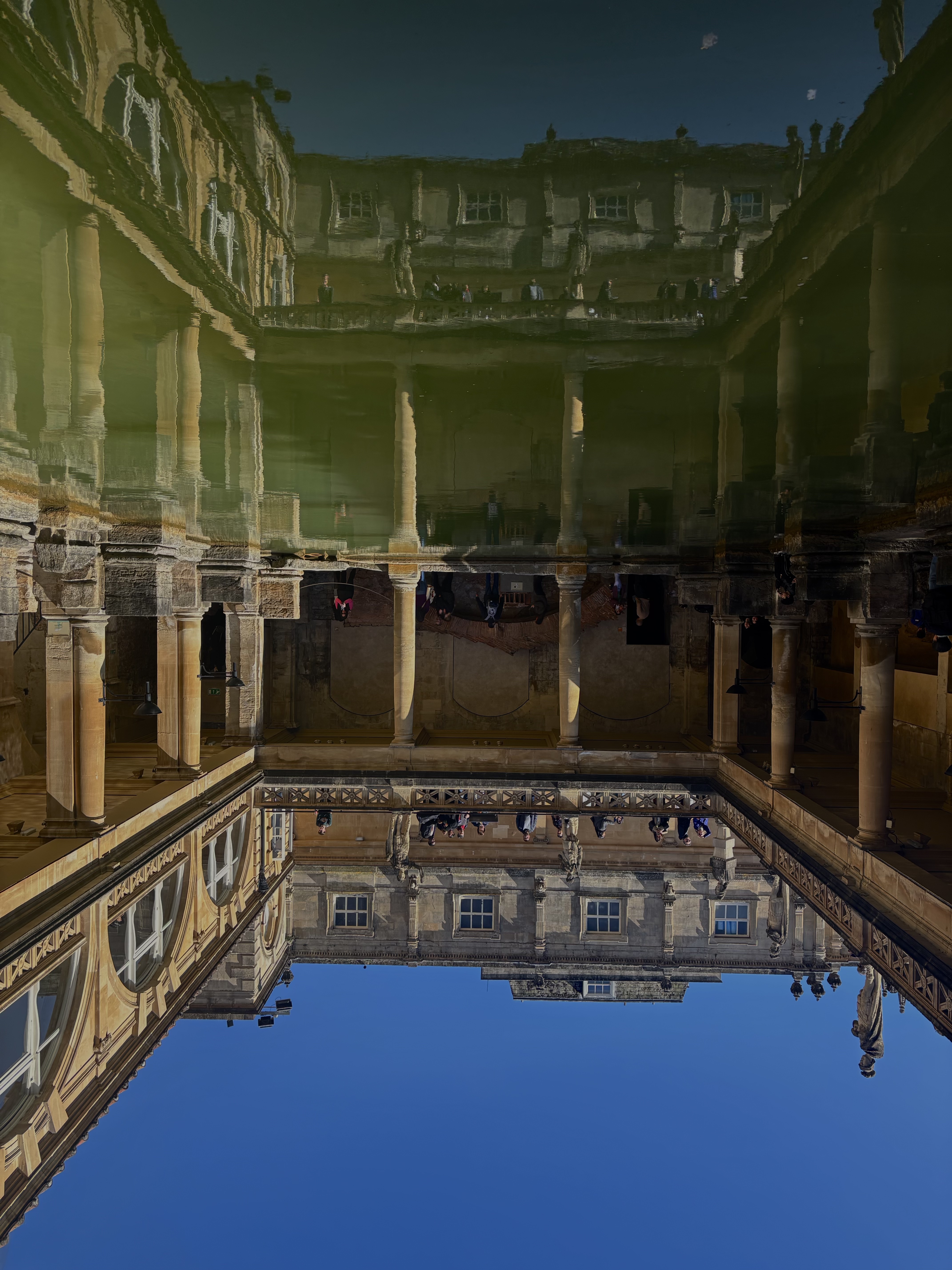
History layers in reverse: we see what came later first, while what came earlier lies below it. This photograph lets Bath be read from the spring upward: first the water of the Sacred Spring, then the Roman bath developed at Aquae Sulis in the later first century AD, then the Victorian terrace with its statues of Roman emperors and governors of Britain added in 1894, and finally the later city beyond.
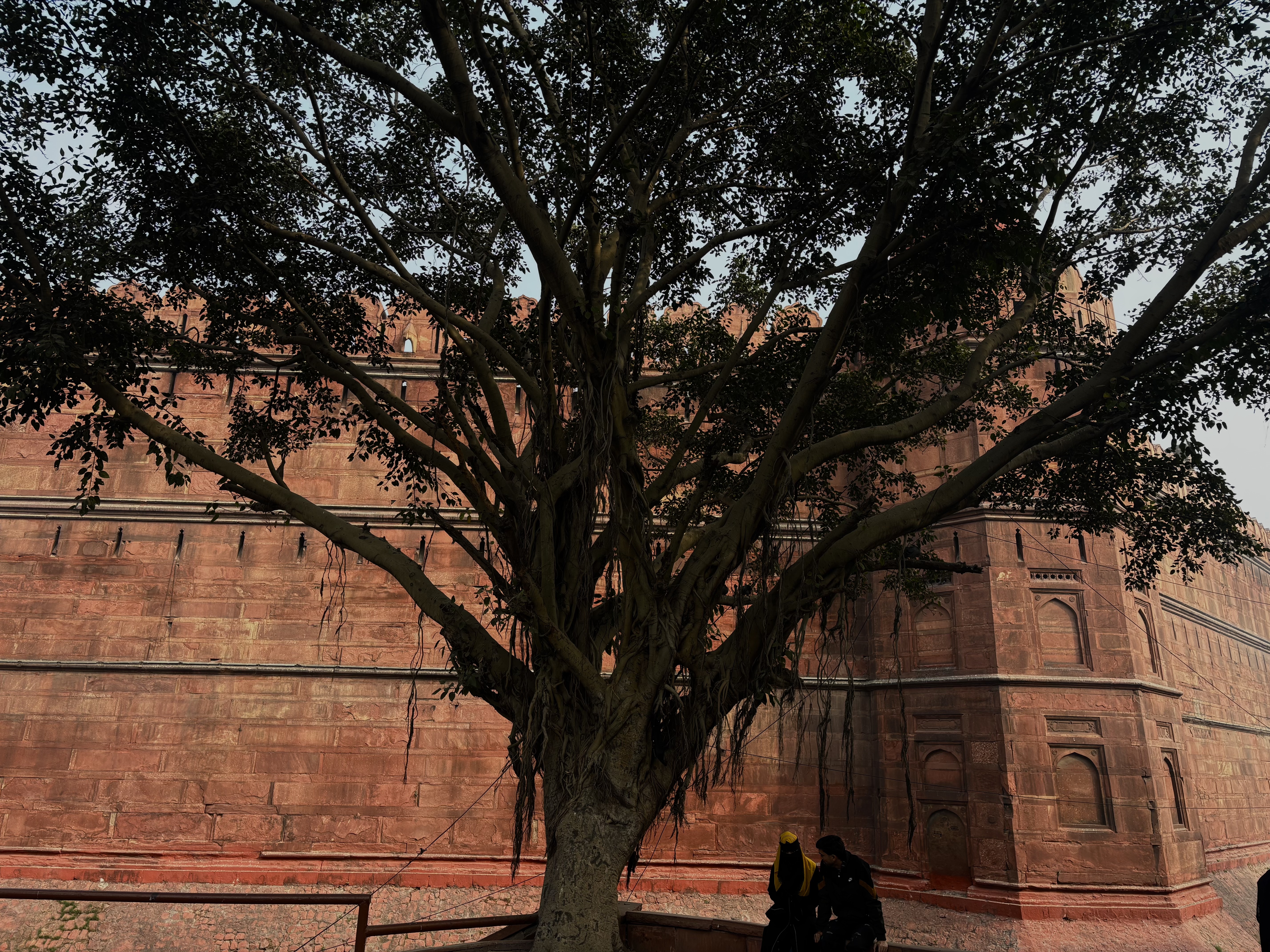
The Red Fort is where independent India addresses itself each Independence Day. Built by Shah Jahan (1639–1648), it was the palace-fortress of Shahjahanabad. In 1739, after Nadir Shah’s invasion, treasures associated with the fort, including the Peacock Throne, were carried away; after 1857, the British demolished many inner structures and added military buildings of their own. This is a photograph of endurance. The Red Fort, a banyan tree, and two lovers.
As of UNICEF’s 5 February 2026 update, at least 21,289 children had been reported killed in Gaza since 7 October 2023.
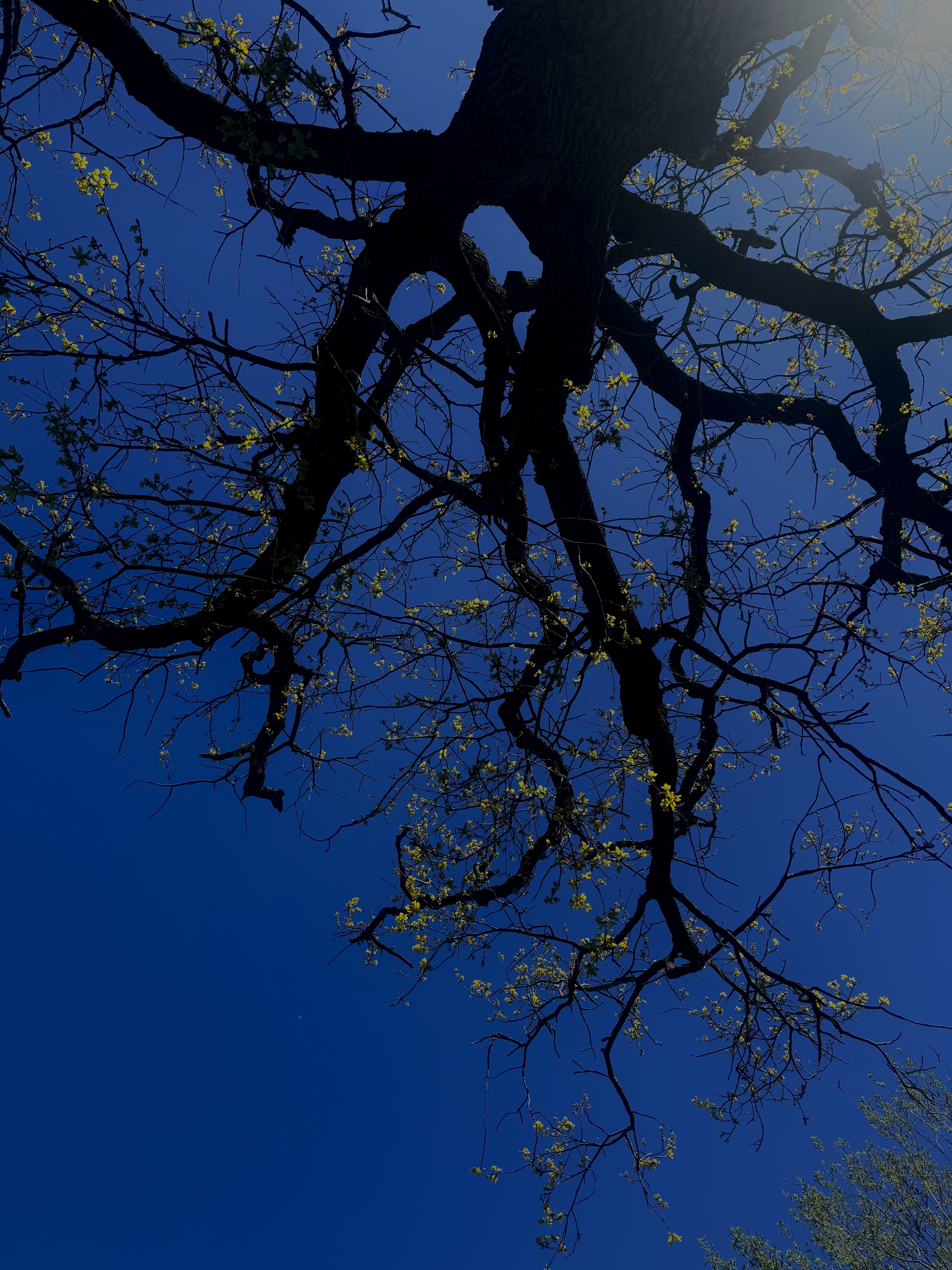
Looking up through an oak tree. The branches were still mostly bare, but the first spring leaves had begun to appear. Photograph by Michael Challis (or sometimes, as he prefers, Michael Chatterjee).